HOW DO I CHOOSE AN INVERTER?

- Output Power Quality
- Connection design of the Inverter
- Electrical Standard of your solar power energy system.
- Wattage ratings of the inverter
- Efficiency rating of the inverter.
- Other features
Several specifications should be looked at before purchasing an inverter for use in your solar power energy system:
Not all inverters produce the same quality of AC power (wave form). A change in wave shape will affect the performance of the appliances. In today’s market, two categories of inverters predominate the market with regards to the quality of power they produce: Modified Sine Wave and Pure Sine Wave Inverters.
Modified Sine Wave Inverters
This is probably the most popular and economical type of power inverter. Modified Sine Wave inverters are not really expensive and work well in all but the most demanding applications. Even most computers work well with a Modified Sine Wave inverter. Modified Sine Wave Inverters are adequate for many homes with simple needs. However, there are drawbacks and exceptions.
AC Appliances are not specifically designed to work with this type of inverter waveform output, although many appliances may still work. Some equipment may seem to be working fine but it may cause the inverter to run harder and reduce the life of the inverter. The result is that some appliances take more power to operate with a Modified Sine Wave Inverter, thereby reducing the efficiency of the entire electrical system.
With Modified Sine Wave inverters, some fluorescent lighting may not get as bright, or they may make buzzing noises. Also, certain appliances with digital clocks or electronic timers may work improperly with this type of inverter because the waves are rougher and cause extra “noise” to be created in the circuitry. Further, some appliances that use electronic controls will not be able to vary speed or temperature when using Modified Sine Wave power. Some appliance motors may produce more heat and burn out when they are operating. The following appliances may experience problems when operated from Modified Sine Wave inverters: Electronic equipment, audio systems, wall-mounted lamp dimmers, corded power tools that have variable speed controls, some battery chargers for cordless tools, devices that have speed/microprocessor controls, medical equipment, & lamp dimmers. Therefore, you should only go for a Modified Sine Wave Inverter for use in simple systems. Systems that do not have any delicate electronics or audio equipment. If you are planning to only run resistive loads (loads which do not have electric motors inside), radios and Incandescent/LED lights, then a Modified Sine Wave inverter can be the inverter of choice.Pure Sine Wave Inverters
Though more expensive, a Pure Sine Wave inverter produces the closest to a pure sine wave of all power inverters. The quality of its output is equivalent to (if not better then) the quality of power you get from the mains supplied to your home from the utility company. As you may be aware by now, the AC power that the utility company provides also comes in pure sine wave form.
Pure Sine Wave output is the most compatible AC power from an inverter, and it is the best waveform for all AC electrical appliances. Pure Sine Wave inverters eliminate interference, noise, and overheating. They reduce audible and electrical noise in fans, fluorescent lights, electronics gear and magnetic circuit breakers. Pure Sine wave output prevents from crashes in computers, unreadable print-outs, and glitches and noise in monitoring equipment. Inductive loads like microwave ovens and variable-speed motors operate properly, quieter and cooler. Some appliances will not produce full output if they do not use Pure Sine Wave power. Also some appliances, such as variable speed drills and toasters, will not work properly without Pure Sine Wave power. Even if you determine that an inverter with a Modified Sine Wave output will suffice for your needs, and though Pure Sine Wave inverters are more expensive, it is always advisable to go for a Pure Sine Wave inverter for the safety and effective performance of your appliances.Another aspect to look at before purchasing an inverter is the connection design of the inverter. Do you want your inverter to start inverting power from the battery automatically as soon as utility power goes down or do you want to switch on the inverter manually? Do you want an inverter which should also charge your backup batteries using utility power or will you only charge your batteries using the solar array via a charge controller? Therefore, you need to look at the connection design of the inverter before purchasing. Three inverter designs are common in the world today:
Grid-Tie Inverters
Grid-Tie inverters do not have a battery backup. Instead, Grid-Tie inverters convert DC power produced by your solar panel array to AC power to supply to electrical appliances and sell excess power back to the utility grid. These systems must be “tied” to a working utility grid to operate (it does not work when the utility grid is down). These systems do not have any battery backup, so their only function is to sell solar-generated power back to the utility grid, which offsets some or all of the metered usage for a given month. Any month the solar-generated power exceeds metered usage of the homeowner, the utility will credit this excess towards a future month when the utility demand exceeds solar generation. A Grid-Tie setup has not been implemented in Zambia. A Grid-Tie setup will require most homeowners to replace their current power meter with one that is compatible with net metering. This device, often called a net meter or a two-way meter, is capable of measuring power going in both directions, from the grid to your house and vice versa. As at the time of publication, no such plan of implementation has been discussed by the government of Zambia.
Off-Grid Inverters
Also referred to as Stand-Alone inverters, Off-Grid Inverters are usually implemented in places where homeowners do not have access to the utility grid or have limited access to the utility grid (due to heavy load-shedding). An off-grid inverter requires a battery bank back-up where the inverter draws its DC power from batteries charged by the solar array and converts to AC power to supply your home or appliances. As technology advances, there are different versions of off-grid inverters coming up on the market:
Inverter Only: These inverters are designed to invert the DC battery power to AC power only. The solar panel array is considered to be the sole re-charging source for the battery bank. To protect the battery bank, a charge controller will have to be bought separately and installed between the solar panel array and battery bank.
Inverter-Chargers: These inverters have an additional feature of re-charging the battery bank from an AC source such as the utility grid when power is available via the utility grid. This gives you an alternative of either using the solar panel array or using the utility grid to re-charge you battery bank. If the utility grid is being used to charge the batteries, Inverter-Chargers have an integrated charge controller which controls the charging/discharging of the battery bank. This is the inverter of choice for many homeowners that do not have budget/capability to invest in a solar panel array and charge controller.
Some Inverter-chargers have a manual switch to select whether to invert power from the battery bank or rather to charge the battery bank, while others have built-in automatic transfer switching which detects whether to start inverting power from the batteries or to stop inverting and instead begin charging the battery bank when utility power is detected.
Hybrid Inverters
Hybrid inverters combine the best from grid-tied and off-grid solar systems. A Hybrid inverter (sometimes referred to as a multi-mode inverter) is an inverter which can simultaneously manage inputs from both solar panels and a battery bank, charging batteries with either solar panels or the electricity grid (depending on which is more economical or preferred). When the batteries are fully charged yet the solar panel array is still producing power, Hybrid inverters can invert this power harvested by the solar panels immediately and pass it on for use directly
to the household loads without letting it go to waste. In the absence of direct solar panel power, Hybrid Inverters take the power from the batteries and as a final point automatically switch to using the grid when the batteries are low. This will be excellent for when there is a grid power cut, your power will be uninterrupted and you will continue having power even when the grid is off. When the batteries are low, and both solar panels and the utility grid are down, some advanced hybrid inverters also support inputs from wind turbines, generators and other power sources to feed power to your home as well as recharge the batteries.As explained before, each of your solar power energy system components have to meet the same voltage standard. For instance, if your battery bank has been configured as a 12V battery bank, the DC input voltage of your inverter will also have to be rated for a 12V DC input. Likewise, if you choose an inverter with a rated DC Input of 24V, your battery bank will also have to be configured with a DC output of 24V.
The AC output voltage and frequency rating of the inverter also has to meet your respective country standards. In the U.S.A, the AC electricity standard is 120V AC, 60Hz, while in Zambia the electricity standard is 240V AC, 50Hz.
Ensure that when you choose an inverter, it meets the required electricity ratings both on the DC input side as well as the AC output side.
Wattage rating is one of the most important factors to look at when choosing an inverter. The wattage rating on an inverter determines how many appliances you can run off the inverter concurrently. The higher the wattage rating, the more appliances the inverter can support at one go. Always compare two kinds of wattage readings on an inverter:
Continuous wattage rating – Hour after hour, what amount of power in watts can the inverter deliver. Surge Power rating – Some appliances (such as those with motors or compressors) can require up to 3-8 times more power than their continuous wattage rating for a few seconds whilst starting. Surge power is how much power and for how long an inverter can deliver this extra power needed to start motors and other loads
It is not possible to convert power without losing some of it (think of "friction"). Efficiency is the ratio of power out to power in, expressed as a percent. If the efficiency is 80%, that means 20% of the power is lost in the inverter (to run the inverter itself). Lost power manifests as heat. Efficiency of an inverter varies with the load. Typically, it will be highest at about 2/3 of the inverter's capacity. This is called its "peak efficiency". The inverter requires some power just to run itself, so the efficiency of a large inverter may be low when running very small loads.
In a typical home, there are many hours of the day when electrical load is very low. Under these conditions, an inverter's efficiency may be around 50% or far lower.
Choose an inverter with a high efficiency percentage rating. However, also keep in mind that because the efficiency varies with load, don't assume that an inverter with 93% peak efficiency is better than one with 85% peak efficiency. The 85% efficient unit may be more efficient at low power levels, for example.
Apart from the above listed main specifications to look at, there are many other features that manufacturers include in their inverters. Some have been listed below to assist you when choosing an inverter:
Solar Panel input: In a typical Zambian scenario, even eight hours of continuous commercial power supply availability cannot be assured. Hence people rely on one of the most reliable and alternate non-conventional power source - Solar energy. Nowadays some inverters facilitate the usage of solar panels also. These inverters are embedded with solar charging circuits and regulators saving you the cost of buying separate charge controllers.
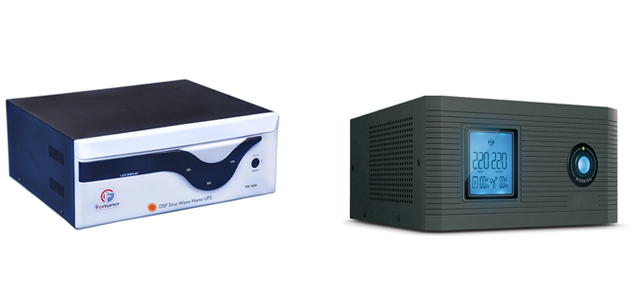
LCD Status Indicators: Modern inverters come with LCD status indicators to display various status like Battery charge level, Load, Input/Output voltages, Battery life etc.
Voltage stabilizer, High/Low voltage cut-off: Some inverters comes with built-in voltage stabilizer, which protects your appliances from voltage fluctuations.
Earth Leakage Protection: Earth leakage protector is a safety device used to protect users from electric shock and appliances from damage. Modern inverters come with built-in earth leakage protection circuits, which continuously monitor earth leakage and cut off the supply to safeguard the users.
About the Author